The Evolution of India’s Education System After Independence

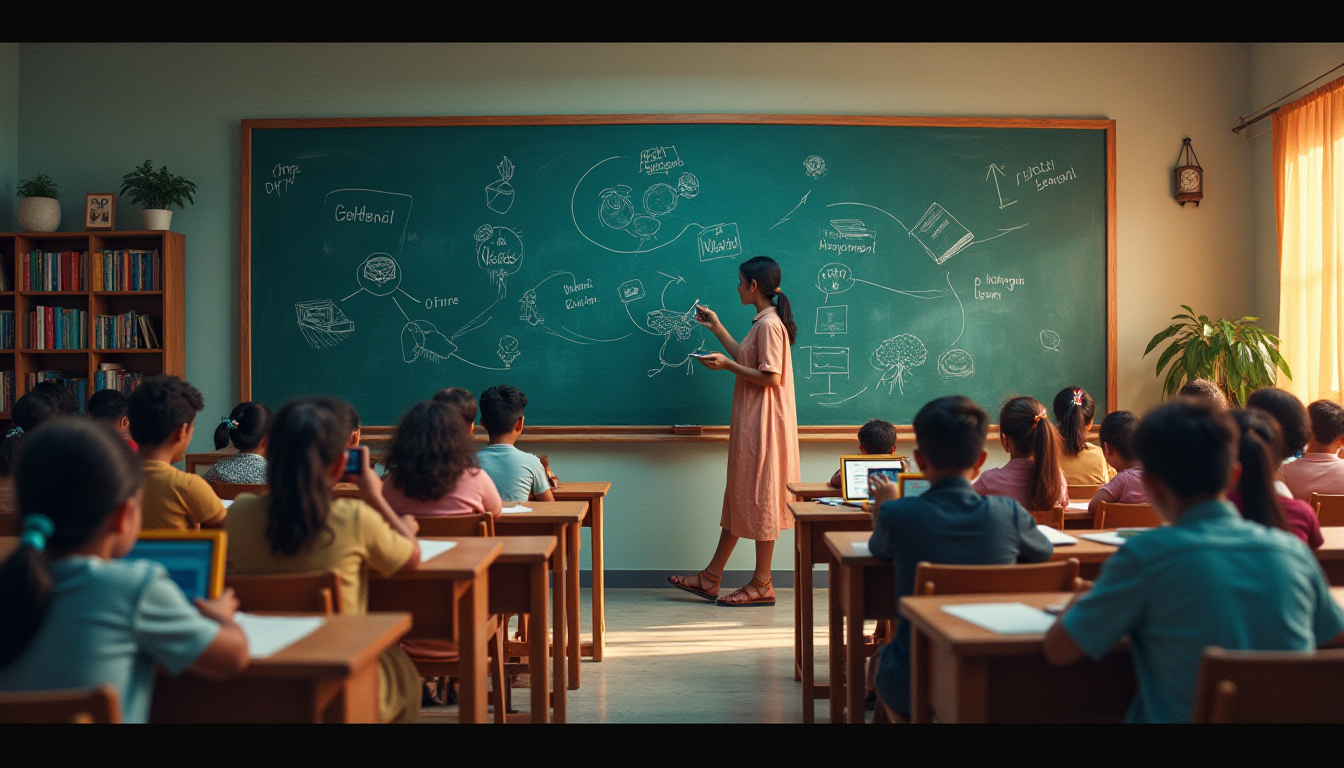
Education in India has gone through a remarkable journey since independence in 1947.
From classrooms with limited access and resources to today’s rapidly changing world of digital learning, the Indian education system has continuously evolved alongside the country itself.
Each decade brought new priorities, new challenges, and new ideas about what education should achieve for children and society.
Understanding this journey helps us better appreciate where Indian education stands today — and where it may be heading in the future.
The Early Years After Independence: Building Access
When India became independent in 1947, education was one of the country’s biggest development challenges.
Literacy rates were very low, especially in rural areas. Many children did not have access to schools, trained teachers, or proper learning materials.
In the early years, the national focus was mainly on:
- Expanding school access
- Increasing literacy
- Building institutions
- Creating a common education structure
The priority was simple:
Bring education to every child possible.
Large efforts were made to:
- Open government schools
- Establish universities
- Train teachers
- Develop national education policies
Education was viewed as an important tool for nation-building and social progress.
The Growth of Structured Schooling
Over time, India developed a more structured school education system.
Boards like:
- CBSE
- State Boards
- ICSE
expanded across the country.
Schools gradually became more standardized with:
- Fixed syllabi
- Subject divisions
- Annual examinations
- Textbook-based learning
The classroom model became familiar across generations:
- Teacher-led instruction
- Note-taking
- Homework
- Memorisation
- Written exams
This structure helped create consistency and scale in a large and diverse country.
It also supported the growing need for:
- Administrative services
- Engineering education
- Medical education
- Competitive examinations
As India industrialized and urbanized, education became strongly connected with career opportunities and economic mobility.
The Rise of Competitive Learning Culture
By the 1980s and 1990s, education in India became increasingly examination-driven.
Board marks, entrance exams, and rankings gained major importance.
Families saw education as one of the strongest pathways toward:
- Stable careers
- Financial security
- Social mobility
As a result:
- Coaching culture expanded
- Academic competition increased
- Performance pressure became more visible
Subjects like:
- Mathematics
- Science
- Engineering preparation
received strong attention due to growing demand in technical professions.
At the same time, India also produced globally respected talent in:
- Technology
- Medicine
- Research
- Management
Many Indian students developed strong discipline, work ethic, and academic rigor during this phase.
The Digital Shift in Education
The late 1990s and 2000s brought major technological changes.
Computers, internet access, and smartphones slowly entered classrooms and homes.
Education began moving beyond physical textbooks.
Students gained access to:
- Educational videos
- Online tutorials
- Digital practice platforms
- E-learning tools
The internet changed how information was accessed.
Knowledge was no longer limited to:
- Libraries
- Classrooms
- Coaching centers
Students could now learn from anywhere.
This period also saw the rapid growth of:
- Private schools
- EdTech platforms
- Skill-based learning initiatives
- Online learning ecosystems
Technology started reshaping the learning experience itself.
A Growing Shift Towards Conceptual Learning
Over the years, conversations around education also started evolving.
Questions began emerging around:
- Student stress
- Rote memorisation
- Creativity
- Critical thinking
- Real understanding
- Skill development
Educators and researchers increasingly discussed:
- Learning science
- Cognitive development
- Personalized learning
- Experiential education
- Holistic development
The focus slowly began shifting from:
“How much students study”
to
“How effectively students learn.”
This marked an important change in educational thinking.
The Arrival of NEP 2020
One of the most significant milestones in recent years was the introduction of the National Education Policy (NEP) 2020.
The policy introduced discussions around:
- Flexibility in learning
- Multidisciplinary education
- Foundational literacy
- Conceptual understanding
- Critical thinking
- Skill development
- Mother tongue learning
- Reduced rote memorisation
It reflected the growing understanding that education in the future would require more than content knowledge alone.
Students would also need:
- Adaptability
- Creativity
- Problem-solving ability
- Communication skills
- Lifelong learning habits
The policy represented another important stage in the evolution of Indian education.
The Modern Indian Classroom Today
Today, Indian classrooms exist across many different realities at the same time.
Some schools are:
- Deeply technology-enabled
- Experimenting with AI and adaptive learning
- Using interactive classrooms
Others continue to work with:
- Limited infrastructure
- Teacher shortages
- Large classroom sizes
India’s educational landscape is extremely diverse.
Students today may learn through:
- Traditional classrooms
- Hybrid models
- Online platforms
- Experiential projects
- Personalized learning systems
Parents, teachers, schools, governments, and educational startups are all contributing to this evolving ecosystem.
A New Understanding of Learning
Modern research has also changed how learning itself is understood.
Today, educators increasingly recognize the importance of:
- Attention
- Memory
- Retrieval practice
- Emotional engagement
- Active participation
- Cognitive science
Learning is now viewed not only as information transfer, but as a deeper process involving:
- Understanding
- Reflection
- Application
- Long-term retention
This has opened new conversations around:
- Neuroscience-based education
- Personalized learning
- Student engagement
- Positive screen time
- Learning behavior
The Road Ahead
India’s education journey continues to evolve.
The future may involve:
- Greater integration of technology
- More flexible learning pathways
- Skill-based education
- AI-assisted personalization
- Deeper focus on conceptual understanding
At the same time, some foundational goals remain constant:
- Expanding access
- Improving quality
- Supporting teachers
- Helping students learn meaningfully
Education in India has always reflected the needs and aspirations of its time.
And as society changes, education will continue changing with it.
Final Thoughts
The story of Indian education after independence is a story of continuous evolution.
From building basic access to exploring personalized learning and cognitive science, the system has transformed significantly across decades.
Every phase brought:
- New opportunities
- New methods
- New expectations
And today, India stands at another important moment — where conversations are moving beyond simply teaching subjects toward understanding how children truly learn.
Because education is not only about preparing students for exams.
It is about preparing them for life, learning, and the future ahead.