A Better Learning System: Why Some Students Grow Faster Than Others

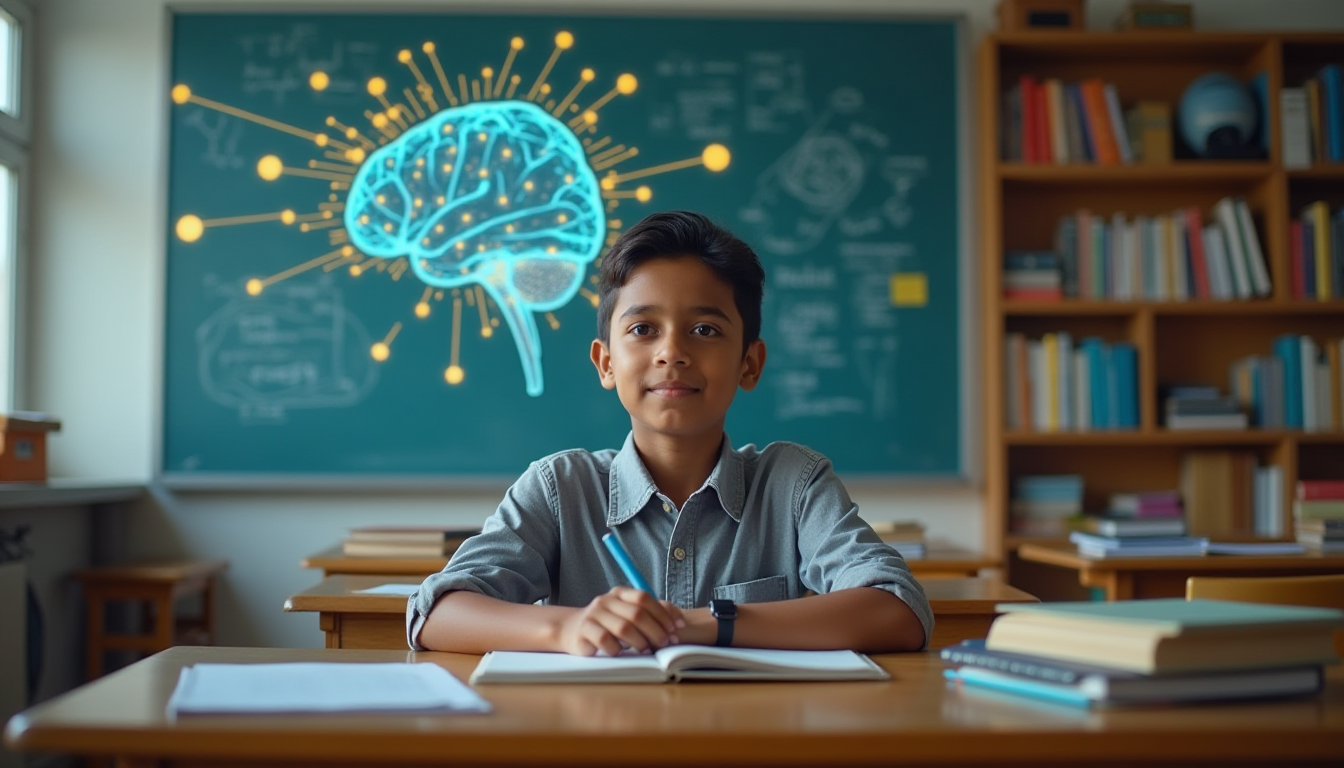
Every student wants to do better.
Better marks. Better focus. Better confidence.
But most students are never taught how to learn.
They are only told to study harder.
This is where the real problem begins.
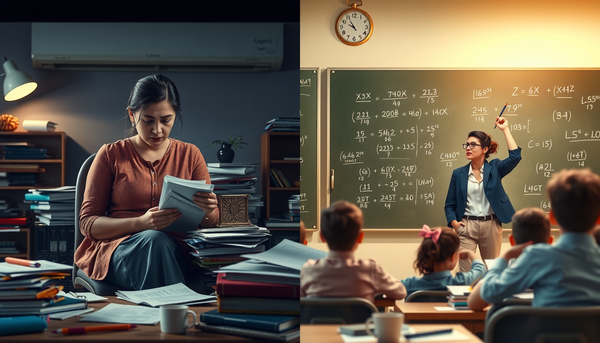
Many children spend hours reading textbooks, watching videos, attending tuition classes, and memorising answers — yet they forget things quickly, lose interest, and feel stressed before exams.
The issue is not always intelligence.
Very often, it is the learning system.
Students who achieve extraordinary growth usually do not study more than everyone else. They simply learn in a smarter way. Their method matches how the human brain actually works.
Why Traditional Studying Often Fails
Our brain is powerful, but it also has limits.
When students try to learn too many new ideas at once, the brain becomes overloaded. This is why children sometimes feel:
- “I studied this yesterday but forgot today.”
- “I understand in class but cannot solve questions myself.”
- “I read for hours but nothing stays in my mind.”
The brain cannot absorb endless information continuously like a machine. It learns best in smaller, meaningful connections.
Unfortunately, many learning methods today focus only on:
- More content
- More homework
- More memorisation
- More pressure
But real learning is not about stuffing information into the brain.
It is about building understanding step-by-step.
The Difference Between Studying and Learning
There is a huge difference between:
- Consuming information
and - Actually learning
A student may watch ten videos on mathematics and still struggle to solve one question independently.
Why?
Because learning happens when the brain actively works, struggles, recalls, connects, and applies knowledge.
That small struggle students feel while solving difficult problems is not a bad sign. In fact, it is often the moment when the brain grows the most.
Easy learning feels comfortable.
Effective learning feels effortful.
A Powerful Learning System
An effective learning system can be understood in three simple stages:
1. Compress — Simplify Before Learning More
Top learners do not try to remember everything.
Instead, they:
- Identify the most important ideas
- Break complex concepts into smaller chunks
- Connect new ideas with things they already know
For example:
A student learning the water cycle may connect it with:
- Steam from hot tea
- Rain outside
- Clouds in the sky
This creates strong mental connections.
When concepts become connected to real-life experiences, memory becomes stronger and learning becomes easier.
Good learners also create:
- Mind maps
- Short summaries
- Drawings
- Stories
- Analogies
The goal is not to memorise more.
The goal is to make information simpler for the brain to handle.
2. Compile — Learn Through Action
Most students keep studying continuously and test themselves only during exams.
This is one of the biggest mistakes in education.
Real learning improves when students follow this cycle:
Learn → Practice → Test → Improve
The brain learns faster when students:
- Solve questions
- Teach others
- Explain concepts aloud
- Apply ideas practically
One of the strongest learning techniques is teaching.
When a child explains a concept to someone else, the brain:
- Organises thoughts clearly
- Finds gaps in understanding
- Builds deeper connections
This is why students often understand topics better after discussing them with friends.
Another important factor is focused learning time.
Research shows that the brain performs best in shorter deep-focus sessions instead of endless hours of distracted study.
Even 60–90 minutes of focused learning can be far more powerful than sitting with books the entire day without concentration.
3. Consolidate — Rest Is Part of Learning
Most people think learning happens only while studying.
But a large part of learning actually happens during:
- Short breaks
- Relaxation
- Sleep
When students rest properly, the brain strengthens and organises memories.
This is why students sometimes suddenly remember solutions after taking a break.
Constant studying without rest weakens focus and retention.
Just like muscles need recovery after exercise, the brain also needs recovery after intense learning.
Healthy learning includes:
- Proper sleep
- Small breaks
- Calm reflection
- Time away from screens
Rest is not laziness.
Rest is part of the learning process.
Why This Matters for Students
A strong learning system changes much more than marks.
Students begin to:
- Understand concepts deeply
- Feel more confident
- Reduce exam stress
- Stay curious
- Learn independently
- Build long-term memory
Over time, this creates students who are not just good at exams, but capable of solving real problems.
And in today’s world, this matters more than ever.
Information is available everywhere. AI can answer questions instantly.
The real advantage now is not who memorises the most.
The real advantage belongs to students who can:
- Learn quickly
- Adapt continuously
- Think clearly
- Apply knowledge creatively
The Future Belongs to Better Learners
Every child can improve their ability to learn.
Some may learn faster initially.
Some may need more time.
But learning is not fixed.
When students use the right methods consistently:
- Focus improves
- Memory improves
- Confidence improves
- Performance improves
Education should not only teach subjects.
It should teach children how to learn.
Because once a child learns how to learn, they can achieve far more than they ever imagined.