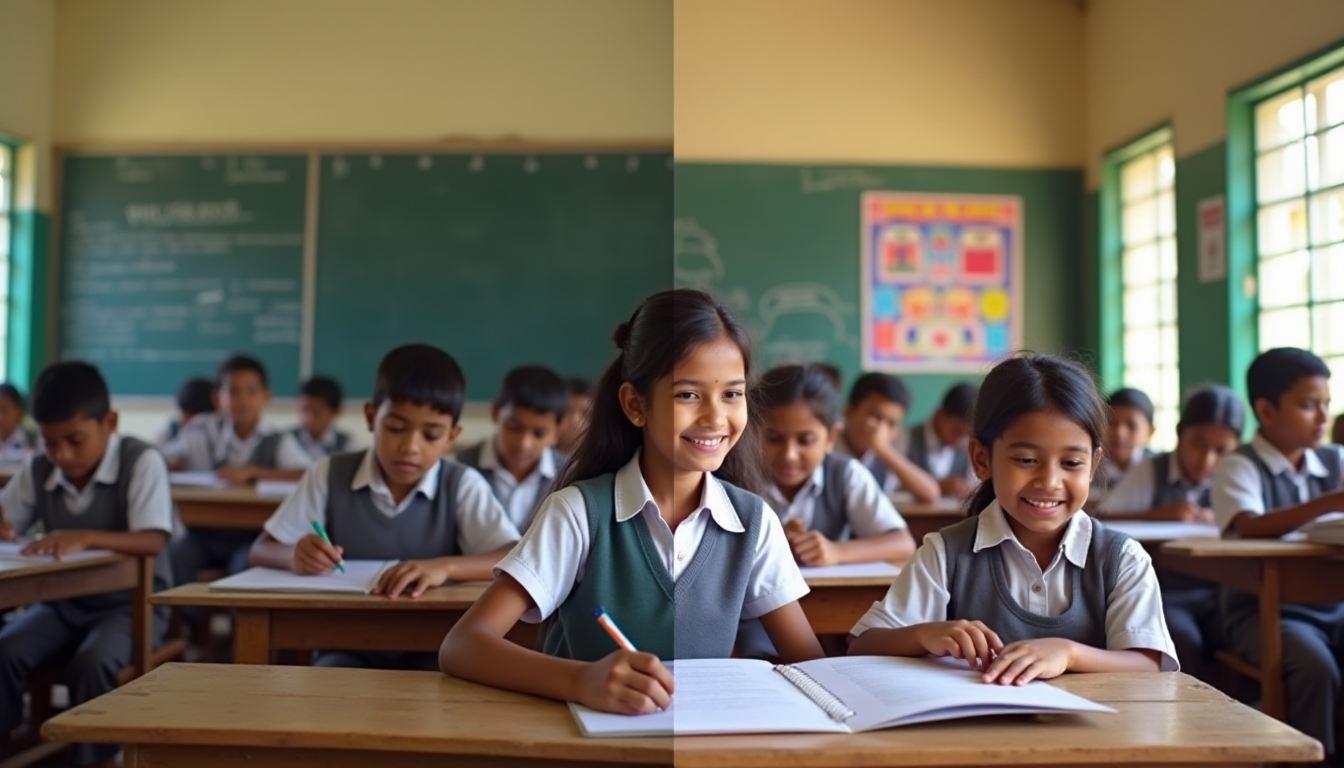
Why Great Teachers Are Burning Out—and What Schools Are Missing

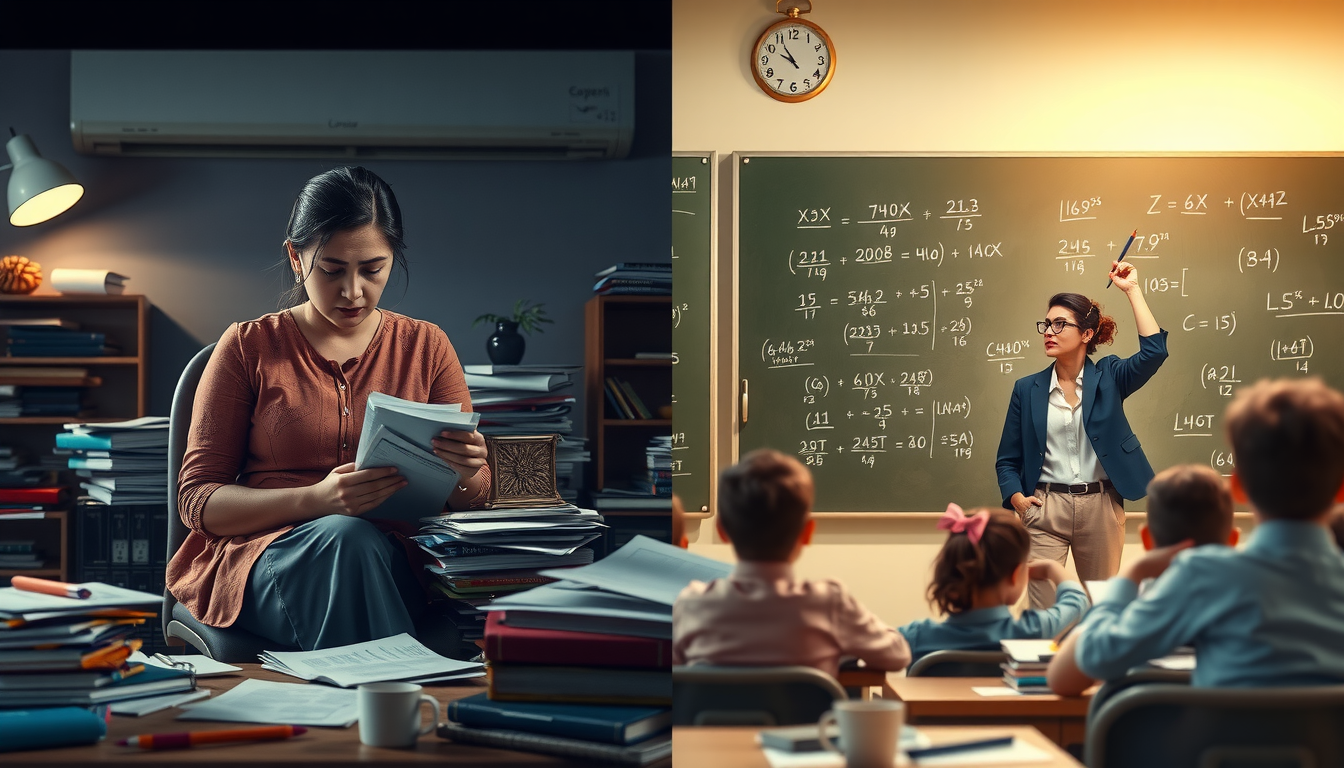
It’s 10:40 PM.
A teacher sits with a stack of notebooks, finishing corrections for the next day.
Her lesson plan isn’t ready yet. A few parents have messaged. Tomorrow’s class is on a new topic.
She pauses and thinks:
“I taught this well today… but I’m not sure who actually understood.”
This uncertainty is subtle. But it’s constant.
And over time, it becomes exhausting.
The Hidden Burden of Teaching
When we talk about teacher burnout, we often point to long hours or administrative load.
But the deeper issue is something else:
Teachers are expected to deliver precision—without visibility.
In a classroom of 30–40 students:
- Some understand instantly
- Some take longer
- Some appear attentive but are lost
- Some understand today but forget tomorrow
And yet, the teacher has to move forward—with everyone.
Not because they want to.
Because the system demands it.
The Problem Is Not Effort. It’s Feedback Delay.
Most classrooms still operate like this:
Teach → Practice → Test → Identify gaps
By the time gaps are identified:
- The class has moved ahead
- Concepts have layered on weak foundations
- Re-teaching becomes necessary
This creates a cycle:
- Teach → Doubt → Re-teach → Rush → Repeat
And slowly, teaching becomes less about learning…
and more about managing uncertainty.
A Classroom We’ve All Seen
Grade 6. Mathematics. Fractions.
The teacher explains clearly. Students nod. A few answer correctly.
She asks:
“Did everyone understand?”
Silence.
She assumes most did.
A few days later, the test reveals:
- Basic conceptual errors
- Forgotten steps
- Confusion in application
Now she has to:
- Go back
- Re-explain
- Slow down the class
And still, a lingering question remains:
“Is everyone actually clear this time?”
What This Does to Teachers
Over time, this pattern creates invisible strain:
1. Teaching Becomes Defensive
Teachers start over-explaining “just in case.”
2. Personalization Becomes Impractical
They want to help every student—but lack the signals to know who needs what.
3. Confidence Erodes
Even great teachers begin to feel unsure of their effectiveness.
4. Energy Gets Drained in Repetition
Time is spent re-teaching instead of deepening understanding.
And this is where burnout truly begins—
not from effort, but from lack of clarity despite effort.
And Then We Add “One More System”
Here’s the uncomfortable truth schools don’t always acknowledge:
Teachers are tired of new tools.
Every year brings:
- A new platform
- A new dashboard
- A new login
- A new “solution”
And almost always, it quietly translates to:
“One more thing for the teacher to manage.”
So the resistance isn’t irrational.
It’s learned.
Because most systems promise support—
but deliver more work in disguise.
What Would Actually Help?
Not another system that asks teachers to:
- Enter more data
- Check more dashboards
- Learn another workflow
But something fundamentally different:
A system that works while the teacher is teaching… and even when they’re not.
A system where:
- Insights come to the teacher
- Data doesn’t need to be hunted
- Gaps surface on their own
In other words:
Data you don’t have to go digging for.
Reimagining the Classroom
Imagine a teacher finishes a lesson and knows:
- Who understood deeply
- Who is partially clear
- Who is at risk
Not after a test.
But immediately.
Over the next few days:
- Students who need help get targeted reinforcement
- Those who are clear move ahead
- No one is left silently behind
And the teacher:
- Doesn’t re-teach blindly
- Doesn’t slow down unnecessarily
- Doesn’t carry the burden of uncertainty
This is not about reducing effort.
It’s about removing wasted effort.
A Shift We Observed in Classrooms
In classrooms where this kind of system was implemented:
- Re-teaching time reduced significantly
- Concept retention improved
- Students made fewer repeated errors
- High performers progressed without friction
But the biggest shift was human, not academic.
Teachers said things like:
“I don’t feel like I’m guessing anymore.”
“I know where to focus.”
“I’m not carrying the whole class in my head all the time.”
And That Changes Everything
When teachers gain clarity:
- They stop overcompensating
- They stop second-guessing
- They start teaching with precision
And slowly, something returns that often gets lost:
Joy.
So Where Does Tailwnd Fit In?
Tailwnd was built with one principle:
If a system adds to a teacher’s workload, it has already failed.
Instead of asking teachers to do more, it focuses on doing more for the teacher.
- It continuously tracks learning in the background through the students' daily practice, surfacing only what truly needs attention.
- It ensures students get automated reinforcement—without the teacher orchestrating it.
In essence:
It is a system that works quietly in the background—
even when the teacher isn’t actively managing it.
Or simply put:
A system that works while you sleep.
Final Thought
We often ask:
“How do we improve student outcomes?”
But a more honest question is:
“How do we reduce the invisible burden teachers carry every day?”
Because when that burden lifts:
- Teaching becomes lighter
- Decisions become clearer
- Classrooms become more effective
And sometimes, the biggest shift doesn’t come from adding more—
It comes from finally having:
clarity without effort.